Spúnóg den Cheo
“A spoon of the fog”, a fog collector and rest point for island landscapes.
Concept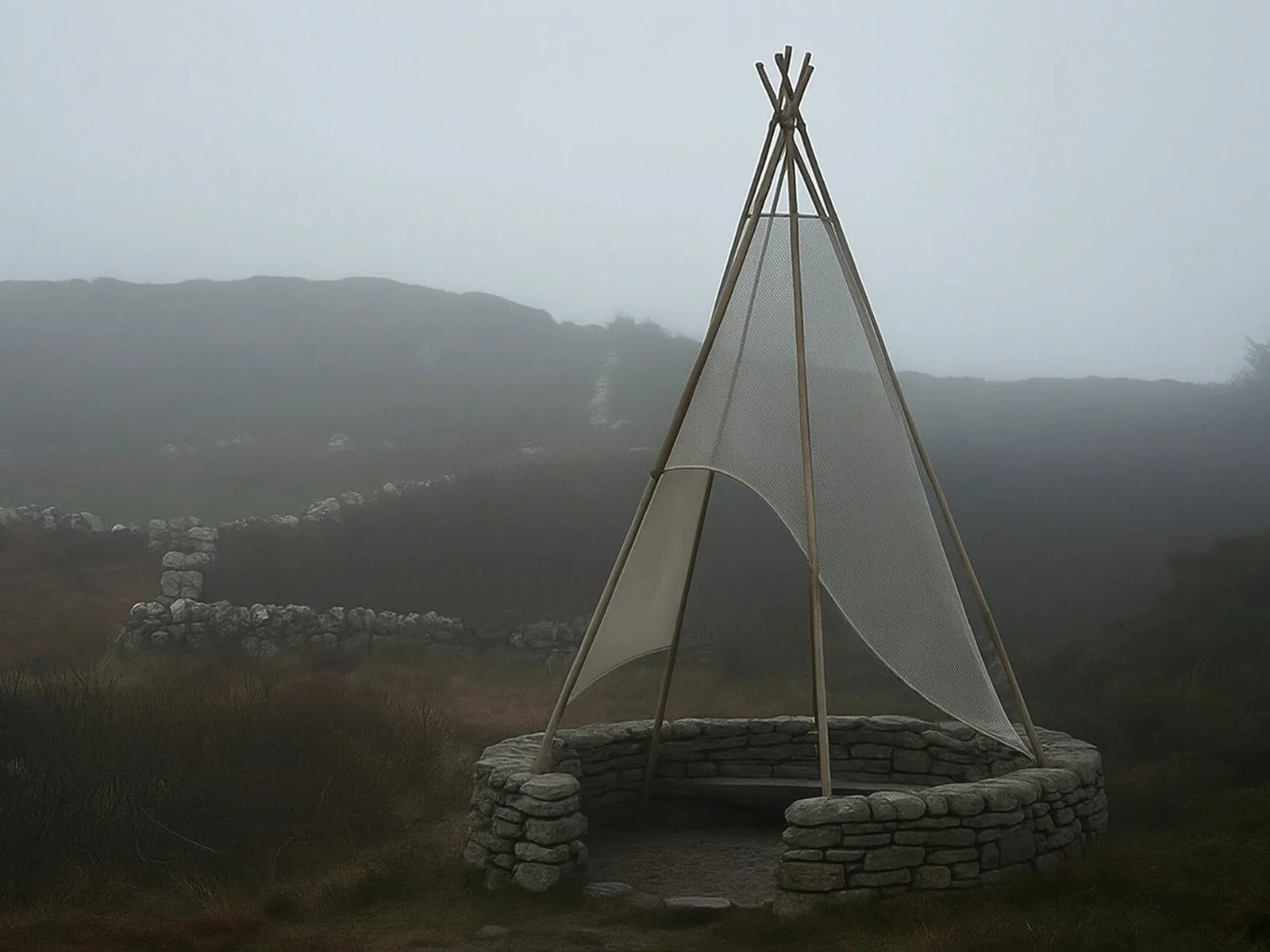
Spúnóg den Cheo grew out of time spent on Sherkin Island: salt-laden wind, rolling fog banks, the sea always audible even when it's not visible. Water seemed to be everywhere and nowhere at once, plenty in the air, none of it drinkable. The project turns that paradox into a small piece of infrastructure: a fog collector and rest point for landscapes where moisture is abundant but fresh water isn't.
The name, “spoon of the fog” in Irish, comes from Gabriel Rosenstock's poem Ceó, in which someone tastes a spoonful of fog and is content. A small, strange image, and the project's way of holding practicality and poetics in the same object.
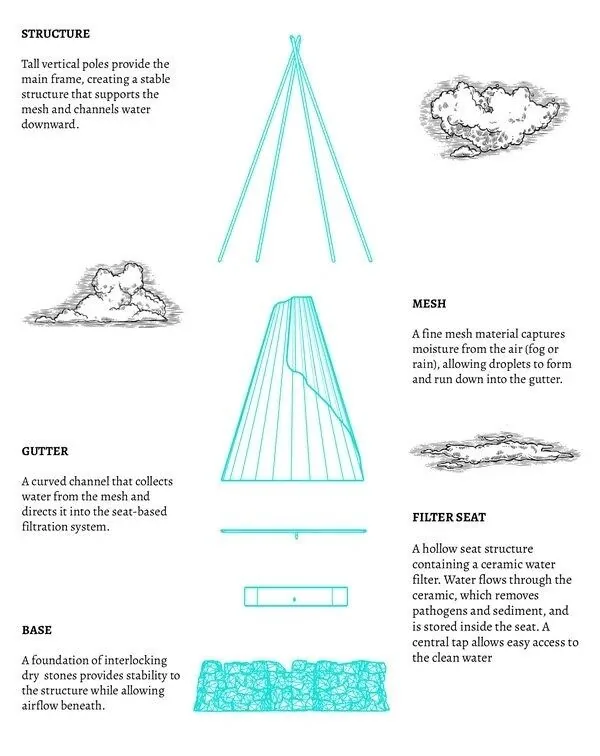
The form is timber poles, a fog-harvesting mesh, and a low dry-stone ring wall built from the same stone as the island's field walls, semi-porous enough to shelter from the wind without cutting off the view of land and sea. Water collects on the mesh and runs down a gutter into a seat holding a ceramic-style filter and a tap, clean enough to fill a bottle or drink straight from. None of it needs power, pumps, or a mains connection, just gravity and the weather doing what it already does here.
It's meant to work for whoever's thirsty, animal as much as human, and to read as a place to rest as much as a piece of infrastructure. It was submitted to LINA's yearly open call, and the longer-term idea is a network of similar waypoints across mountainous, coastal and island communities, not just this one structure on this one island.
- Location
- Sherkin Island
Cork, Ireland - Type
- Concept
- Context
- Submitted to
LINA open call - Themes
- Water · Landscape
Rest · Poetics
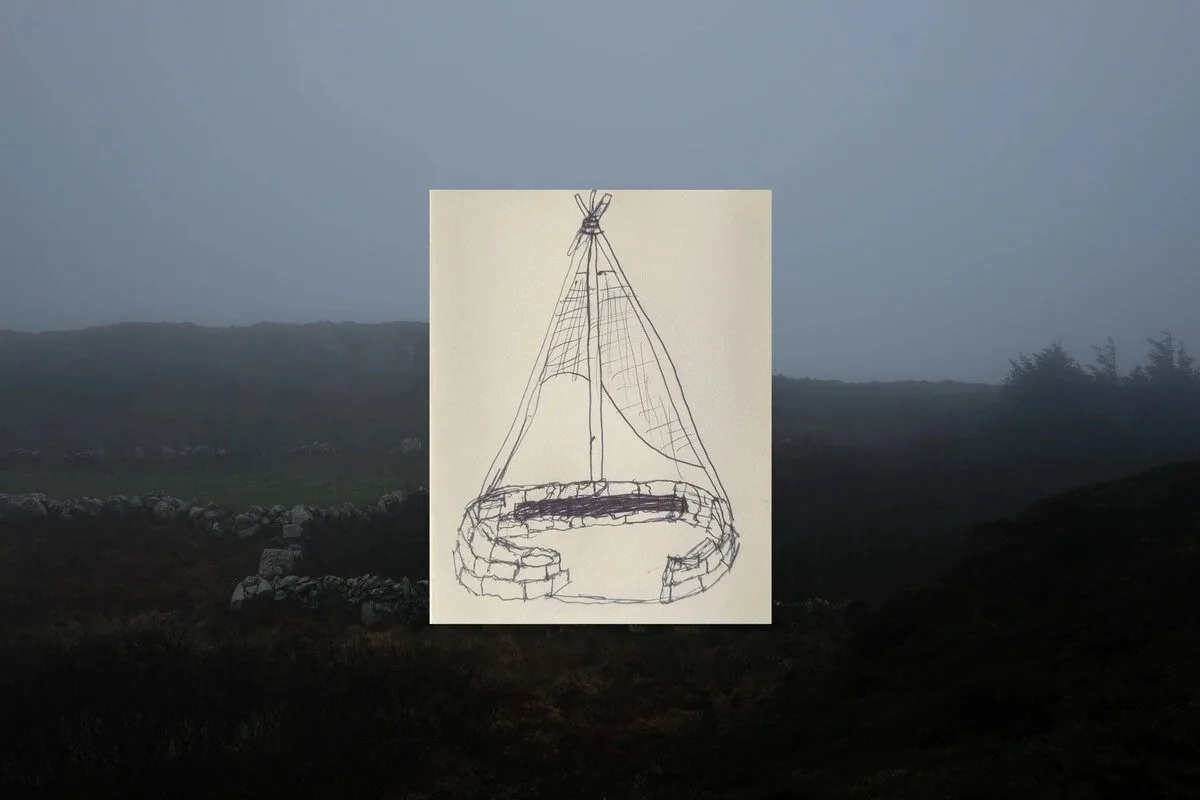
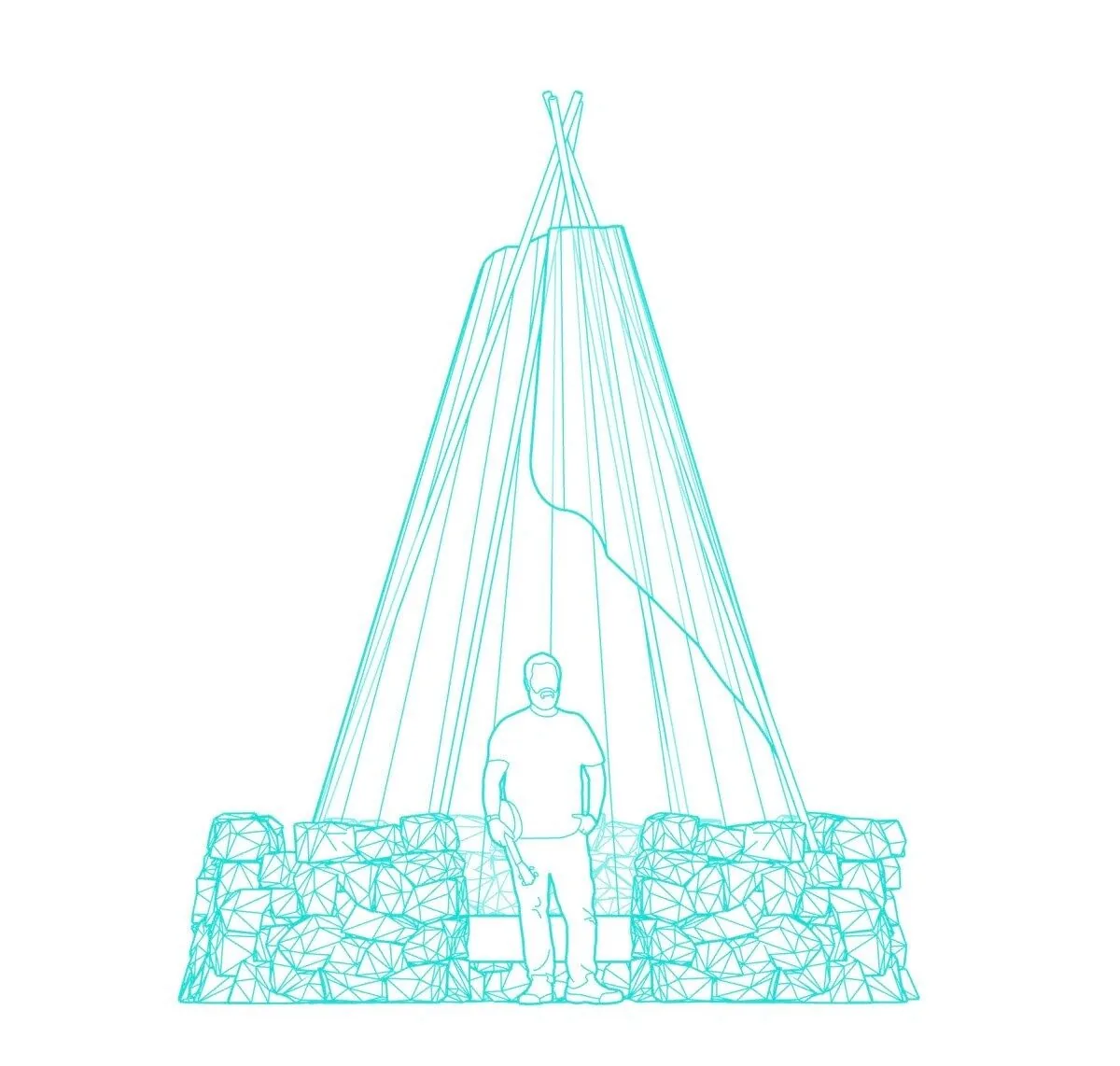
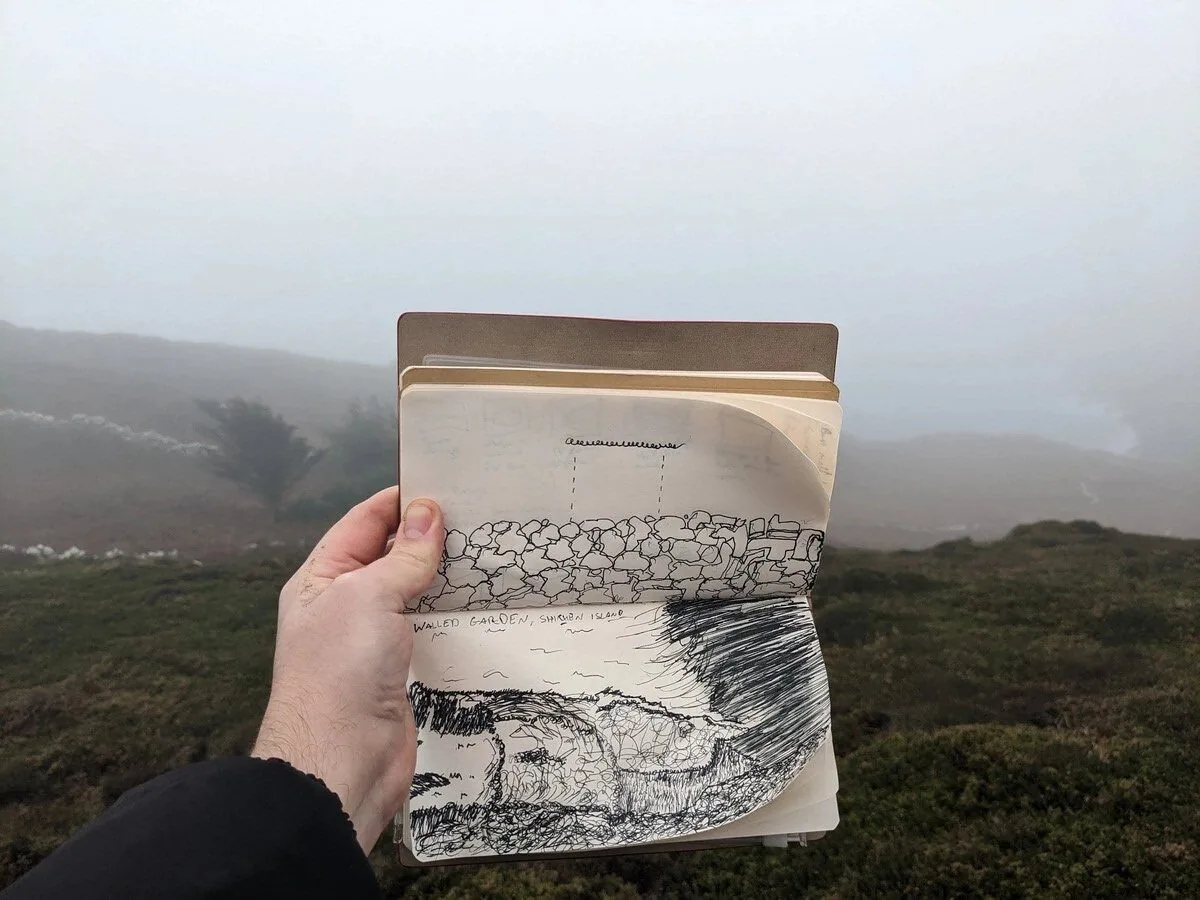
Before designing anything, I tried asking the place the same question the studio's built around: how are you? Not a client, the landscape itself, and then the fog directly.
The landscape's answer, as I imagined it: foggy, beautiful, untouched by developers, a long way from any services, lonely. The fog's answer stuck with me more: “I feel like I'm a huge resource that is underlooked, and I could be used to the benefit of society, and I should be used. You should be considering me more and working with me in a sustainable way.”
Spúnóg den Cheo is an attempt to actually do that.
Capturing water without any power source
Problem: a mains-fed or pumped system isn't realistic this far from any services, and would undercut the whole point of the piece. Approach: relied entirely on passive fog and rain capture, mesh, a gravity-fed gutter, no moving parts. Result: a working water source that needs no electricity, pipework, or real maintenance.
Staying stable in open, exposed weather
Problem: tall poles on an exposed coastal site are vulnerable to strong Atlantic wind. Approach: anchored them into a dry-stone ring wall built from the same stone as the island's field walls. Result: a structure that's grounded and wind-resistant while still reading as part of the landscape rather than dropped onto it.
Collecting water without making it undrinkable
Problem: moisture condensing off mesh in a coastal fog environment could pick up salt, dust or grit before anyone drinks it. Approach: ran the gutter into a seat containing a ceramic-style filter before it reaches the tap. Result: water clean enough to fill a bottle or drink directly, not just water that's merely been caught.
Treating the site as more than a backdrop
Problem: it would be easy to design this as pure infrastructure, or as a sculpture, and miss who actually uses the spot, animals as well as people. Approach: asked the landscape and the fog directly what they needed, rather than starting from a typical client brief. Result: a design that serves walkers and wildlife alike, and reads as something the place needed rather than something added to it.
Explore related work in art, community and place-based spatial practice.
Explore art + collaboration