Scrap Lab
A piece of furniture built entirely from scrap and discarded material found nearby.
Built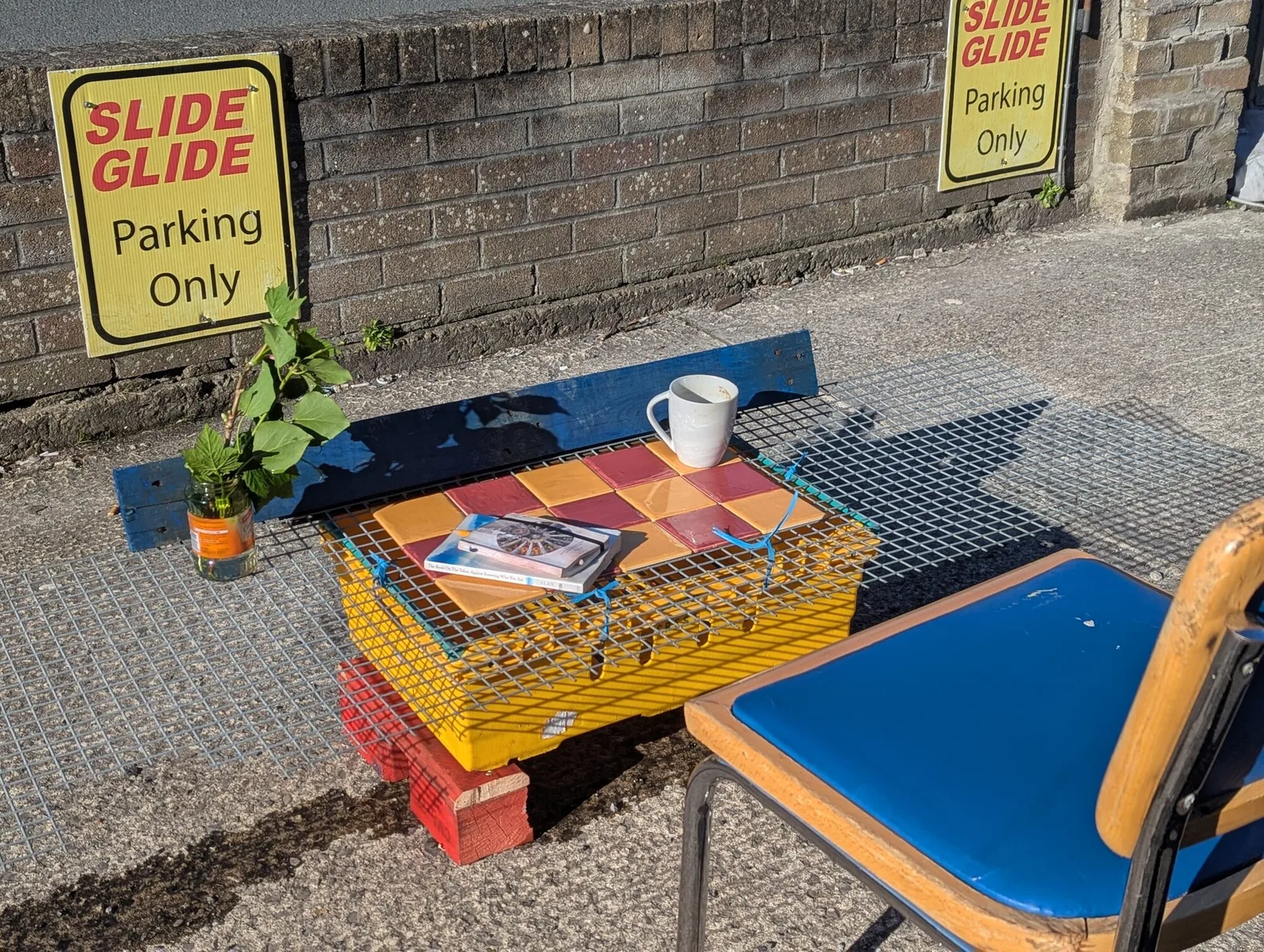
The question
What can be made from the materials discarded around a place?
My contribution
Sourcing, experimenting and making with found scrap in Glasnevin.
The result
A usable piece of furniture. A participatory workshop format is a future ambition.
Scrap Lab is an idea I've been turning over for a while: source scrap and discarded material from wherever I happen to be, and build a usable piece of furniture out of whatever turns up, no shopping list, just what's lying around. It's meant to challenge fast furniture, lean into a DIY ethos, and work as a fun design challenge in its own right, shaped as much by place and happenstance as by any plan.
The real aim is bigger than one table. I'd like to turn Scrap Lab into a proper workshop format eventually, something that pushes back on the idea that everything in a room has to be bought. There's a lot of material going to waste that could become something useful instead, and making your own furniture, even something rough and improvised, tends to give a space more character than anything off a shelf.
- Location
- Glasnevin, Dublin
- Year
- 2026
- Type
- Self-initiated
craft project - Thanks
- Daylight Glasnevin
@jen.h.studio
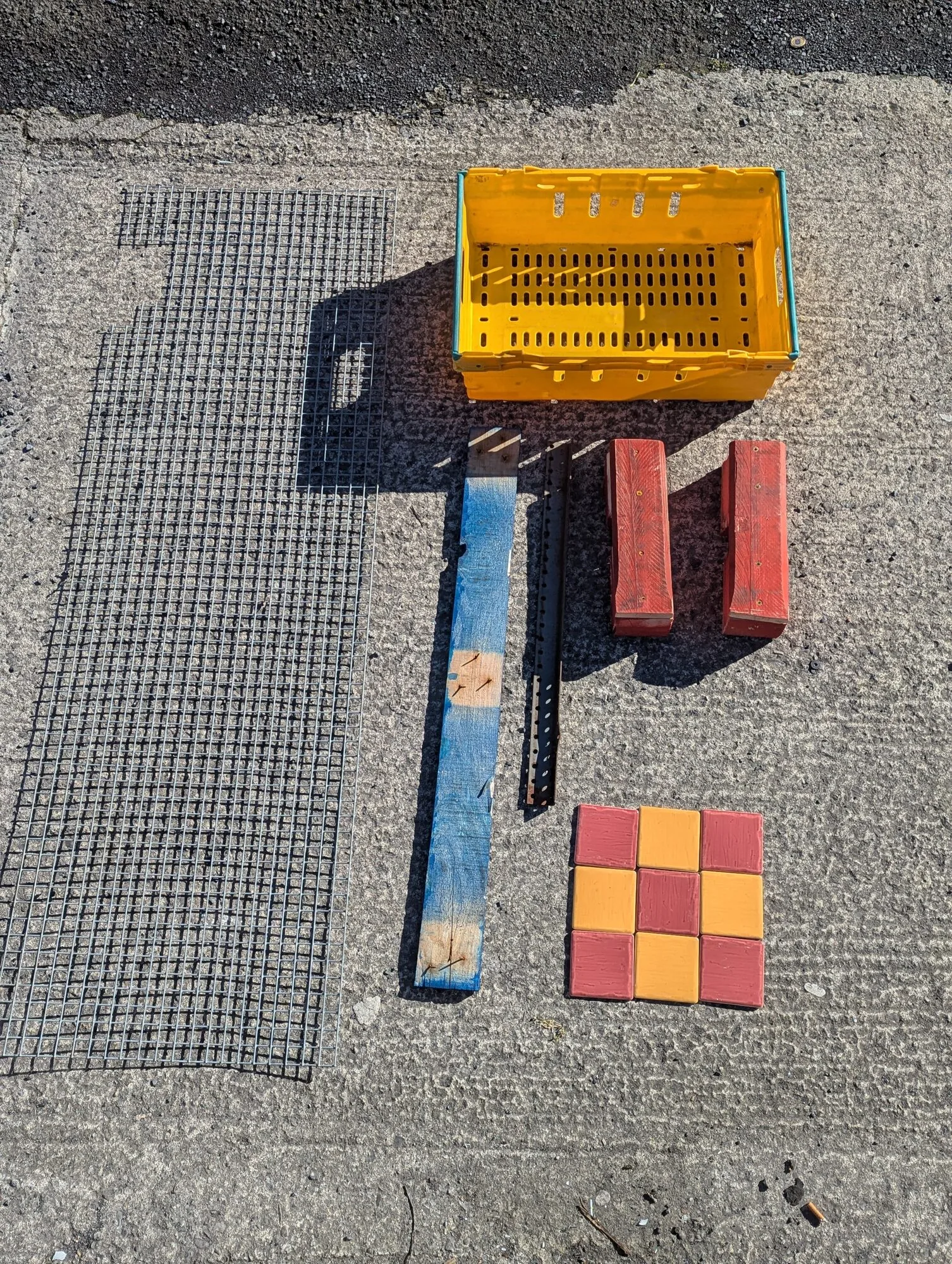
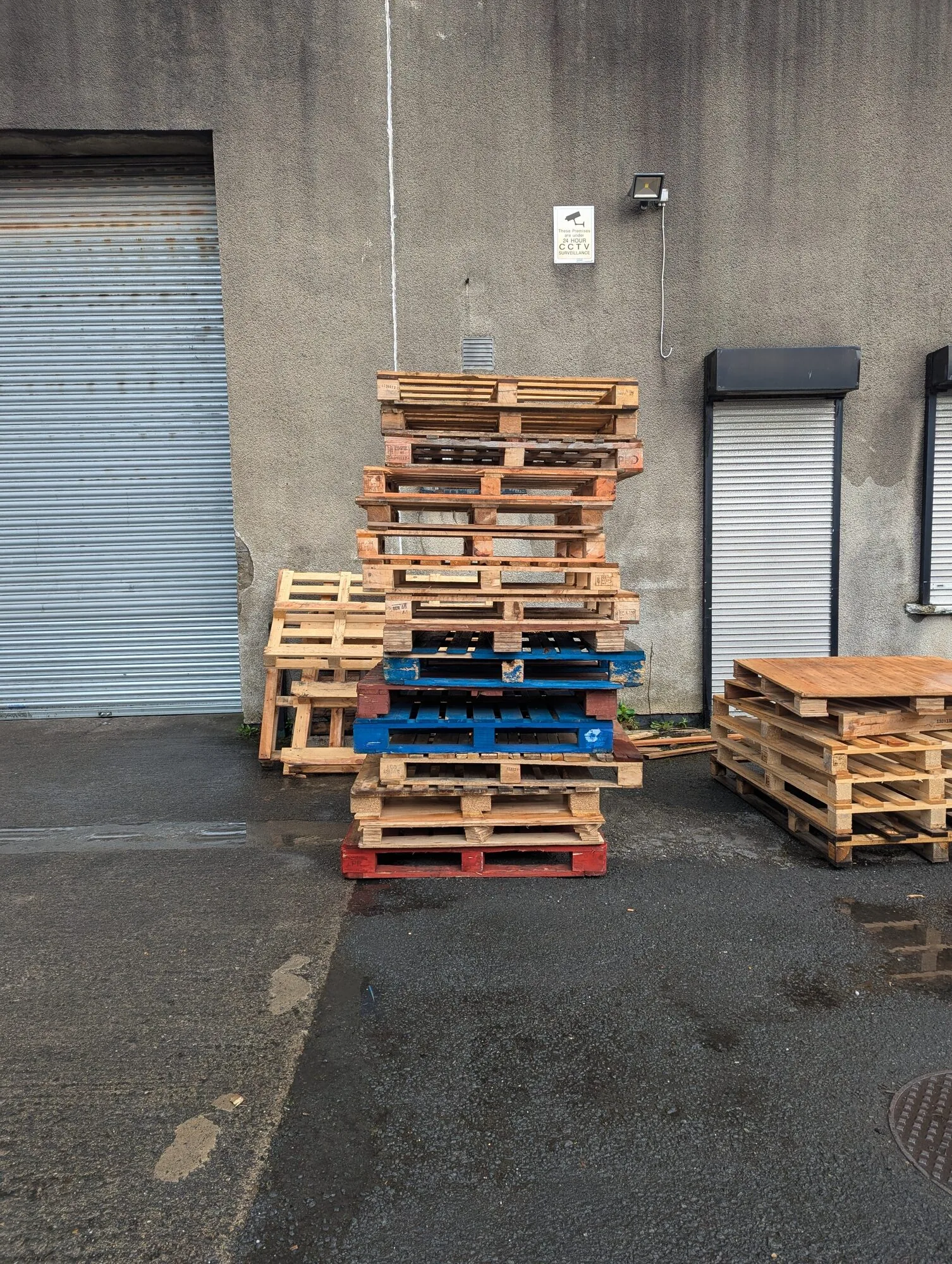
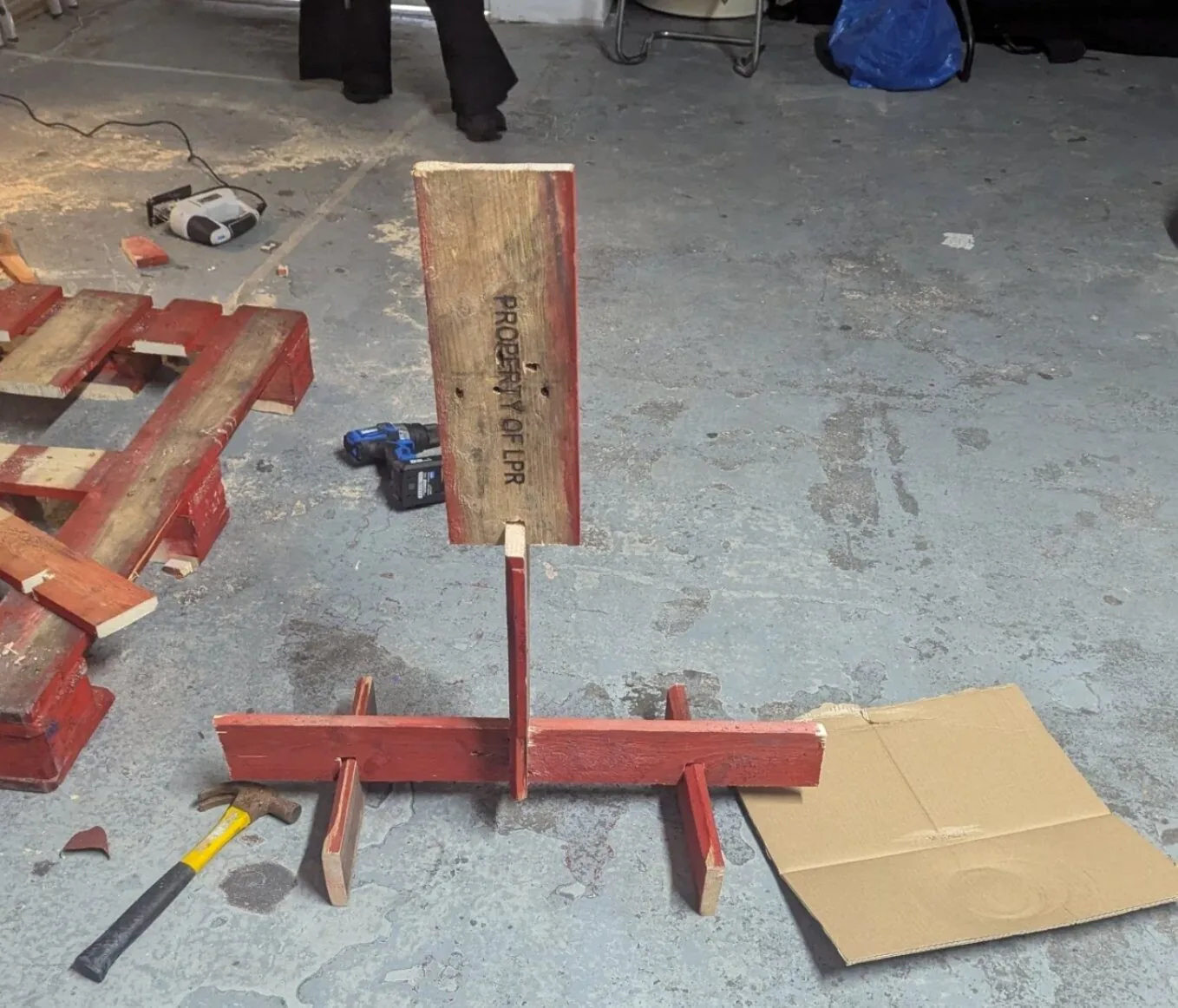
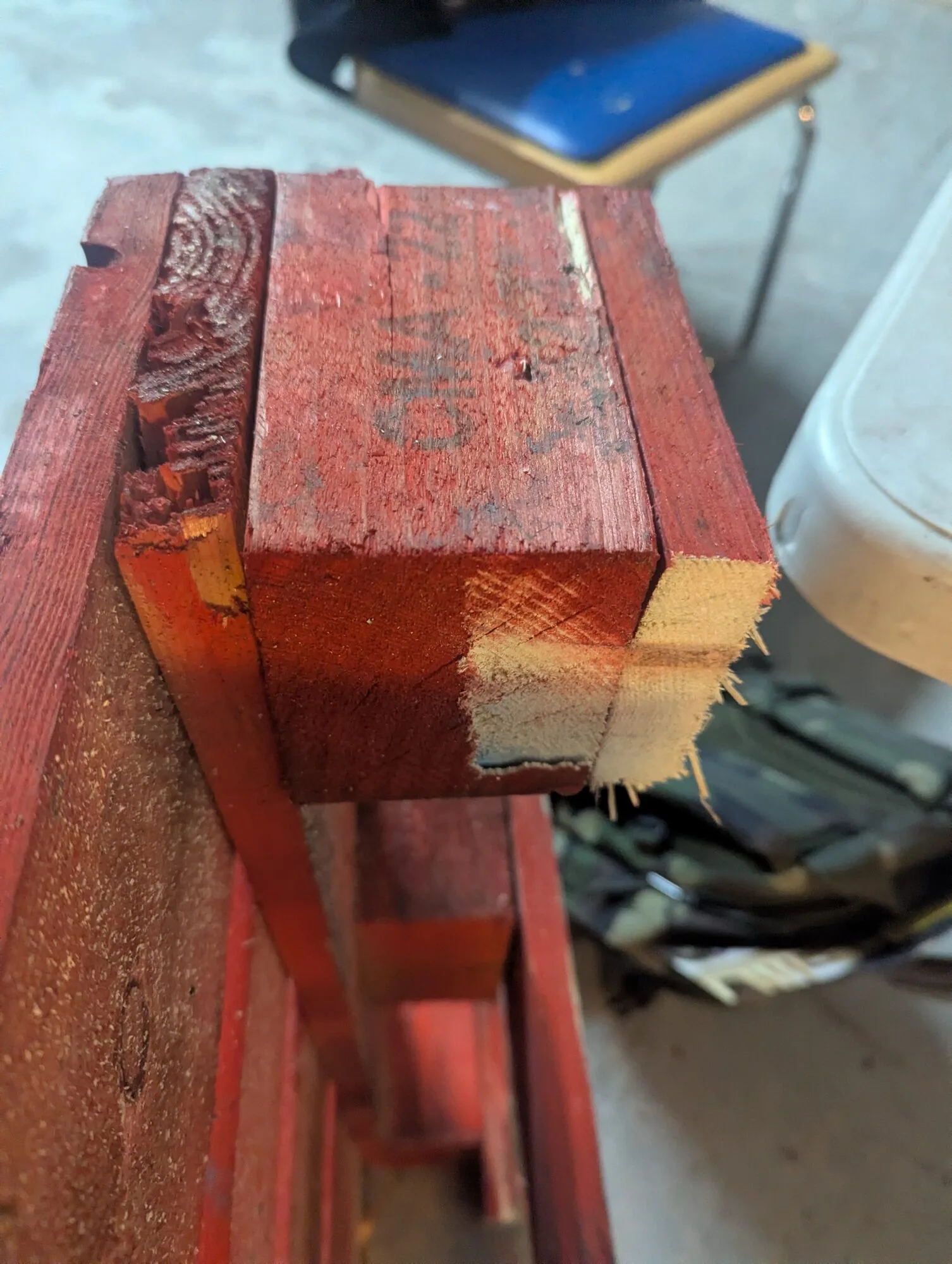
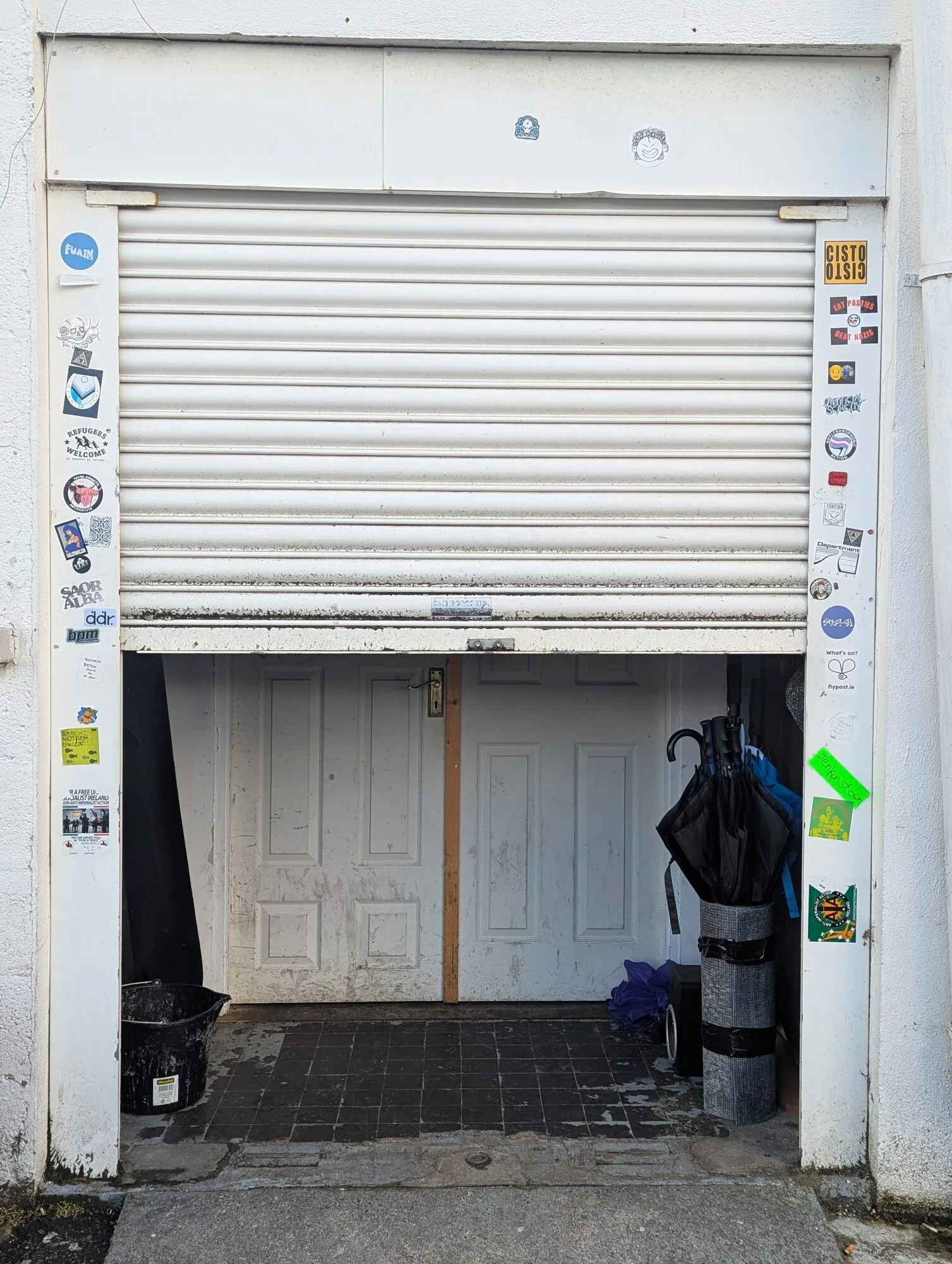
This first attempt came together at Daylight Glasnevin, who let me use their space to prototype the idea (and to whom, along with everyone passing through, I owe a big thank you, that place is doing real work for Irish arts). The piece itself is built from whatever turned up locally: a wire grate from the back of a discarded crate as the tabletop, two legs chopped from a red pallet found nearby, a backrest from the same pallet's blue-painted timber, and a yellow plastic crate and a set of tiles both pulled from an industrial estate skip pile.
Working without a material list
Problem: a normal furniture build starts with chosen materials, this one started with whatever was actually available. Approach: treated the brief as “build something usable from what turns up” rather than designing first and sourcing after. Result: the look of the piece, mismatched colour and texture included, comes directly from what was found, not from a mood board.
The scrap materials weren't built to work together
Problem: a wire grate, a plastic crate, pallet timber and loose tiles have nothing in common structurally or visually. Approach: used the most uniform material, the chopped pallet legs, as the structural base, then let the grate, crate and tiles sit on top rather than forcing them to integrate seamlessly. Result: a piece that reads as deliberately mismatched rather than awkwardly thrown together.
No fixed plan to design around
Problem: without knowing what would turn up, there was nothing to draw or measure in advance. Approach: scouted the industrial estate and a discarded pallet first, then built the design around what was actually found. Result: the finished piece is shaped by the place it was made as much as by any decision made beforehand.
Proving it's repeatable, not a one-off
Problem: a single scrap-built table doesn't on its own make the case this could work as an ongoing project or workshop. Approach: documented exactly where each part came from, not just the finished object. Result: a process that's easy to repeat anywhere there's scrap lying around, which is the actual point of Scrap Lab.
Explore related work in art, community and place-based spatial practice.
Explore art + collaboration